
- 01 September 2026
- Important days
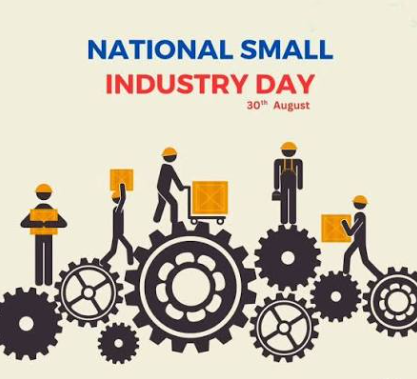
National Small Industry Day 2026
National Small Industry Day is
observed in India on August 30th.
Its objective is to highlight the
contribution of small industries to the country's economic development,
entrepreneurship, job creation, and regional industrialization.
This sector is particularly crucial
for rural and semi-urban economies.
Institutional
Development of the MSME Sector
In the year 2000, the government
introduced a comprehensive policy package for small industries covering credit,
infrastructure, marketing, and technology.
Subsequently, the MSMED Act, 2006,
provided a comprehensive statutory framework for Micro, Small, and Medium
Enterprises.
Periodic revisions to MSME
classification aim to provide enterprises with greater opportunities for
growth.
Role of MSMEs in the Indian Economy
MSMEs play a significant role in
manufacturing, services, agro-based activities, exports, and supply chains.
According to available data, the
sector accounts for approximately 31.1% of GDP, 35.4% of manufacturing output,
and 48.58% of exports.
It is also a crucial foundation for
employment and inclusive growth.
Employment and Regional Development
The MSME sector provides employment
to millions of people and ranks among the major employment providers, second
only to agriculture. Its widespread geographical presence fosters local
employment, rural industrialization, and entrepreneurship beyond major
industrial hubs.
This sector can also generate significant
opportunities for women, the youth, and first-generation entrepreneurs.
Emphasis on financial access in 2026
Delayed payments and working
capital constraints have been major issues for MSMEs.
The TReDS (Trade Receivables
Discounting System) has been promoted for MSMEs involved in government
procurement.
Efforts are being made to improve
access to formal finance, government schemes, and institutional support through
the expansion of Udyam registration.
Strategic significance for UPSC
This topic relates to MSMEs,
employment, exports, financial inclusion, and industrial development within GS
Paper-III (Indian Economy).
Key challenges include affordable
credit, technological upgradation, market access, skill development,
digitalization, and integration into global value chains.
In UPSC answers, measures such as
credit guarantees, TReDS, Udyam registration, cluster development, and
technology upgradation can be cited as solutions to enhance MSME
competitiveness.
- 01 September 2026
- Important days
National Small Industry Day 2026
National Small Industry Day is
observed in India on August 30th.
Its objective is to highlight the
contribution of small industries to the country's economic development,
entrepreneurship, job creation, and regional industrialization.
This sector is particularly crucial
for rural and semi-urban economies.
Institutional
Development of the MSME Sector
In the year 2000, the government
introduced a comprehensive policy package for small industries covering credit,
infrastructure, marketing, and technology.
Subsequently, the MSMED Act, 2006,
provided a comprehensive statutory framework for Micro, Small, and Medium
Enterprises.
Periodic revisions to MSME
classification aim to provide enterprises with greater opportunities for
growth.
Role of MSMEs in the Indian Economy
MSMEs play a significant role in
manufacturing, services, agro-based activities, exports, and supply chains.
According to available data, the
sector accounts for approximately 31.1% of GDP, 35.4% of manufacturing output,
and 48.58% of exports.
It is also a crucial foundation for
employment and inclusive growth.
Employment and Regional Development
The MSME sector provides employment
to millions of people and ranks among the major employment providers, second
only to agriculture. Its widespread geographical presence fosters local
employment, rural industrialization, and entrepreneurship beyond major
industrial hubs.
This sector can also generate significant
opportunities for women, the youth, and first-generation entrepreneurs.
Emphasis on financial access in 2026
Delayed payments and working
capital constraints have been major issues for MSMEs.
The TReDS (Trade Receivables
Discounting System) has been promoted for MSMEs involved in government
procurement.
Efforts are being made to improve
access to formal finance, government schemes, and institutional support through
the expansion of Udyam registration.
Strategic significance for UPSC
This topic relates to MSMEs,
employment, exports, financial inclusion, and industrial development within GS
Paper-III (Indian Economy).
Key challenges include affordable
credit, technological upgradation, market access, skill development,
digitalization, and integration into global value chains.
In UPSC answers, measures such as
credit guarantees, TReDS, Udyam registration, cluster development, and
technology upgradation can be cited as solutions to enhance MSME
competitiveness.
- 01 September 2026
- Sci - tech
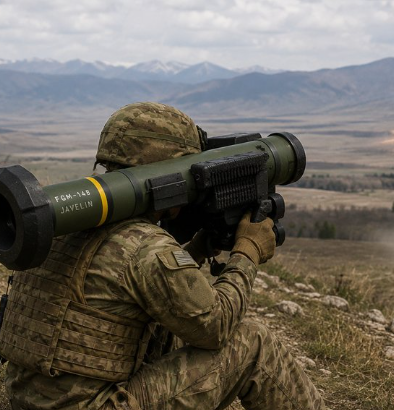
Indian Army to Procure US-made FGM-148 Javelin Anti-Tank Missiles
The Indian Army is set to procure a
limited number of US-made FGM-148 Javelin Anti-Tank Guided Missiles (ATGMs).
This procurement is being carried
out under the Foreign Military Sales (FMS) process and the Army's emergency
procurement powers.
This will help immediately
strengthen the Indian Army's modern anti-tank capabilities.
Key Features of the Javelin
The Javelin is equipped with an
Imaging Infrared (IIR) seeker and utilizes 'fire-and-forget' technology.
Once the target is locked, the
operator does not need to continuously control the missile's flight path.
This capability allows the operator
to move to a safe location immediately after firing the missile.
Top-Attack Capability and Anti-Tank
Effectiveness
A key feature of the Javelin is its
'top-attack' mode, which enables the missile to target the relatively
vulnerable upper section of a tank.
It is designed to be effective even
against armored vehicles equipped with Explosive Reactive Armour (ERA). This
capability could prove crucial in high-altitude and border regions.
A long-standing requirement
India has been seeking a modern
ATGM since around 2009.
India subsequently selected the
Israeli Spike ATGM, but the procurement process faced multiple delays.
A limited number of Spike missiles
were acquired through emergency procurement in 2019.
The current procurement of the
Javelin is an attempt to bridge this long-standing capability gap.
Indigenous
ATGM and self-reliance
India is simultaneously developing
an indigenous MPATGM (Man-Portable Anti-Tank Guided Missile).
The DRDO system incorporates modern
capabilities such as 'Top-Attack' and 'Fire-and-Forget'.
It is being manufactured in
collaboration with Bharat Dynamics Limited (BDL) and Bharat Electronics Limited
(BEL).
This could help reduce dependence
on imports in the long run.
Strategic significance for UPSC
This topic is important for GS
Paper-III (Defence & Security). It can be linked to concepts such as
defence indigenisation, technology transfer, FMS (Foreign Military Sales),
emergency procurement, *Atmanirbhar Bharat* (Self-Reliant India), DRDO, and
anti-tank warfare in modern combat.
- 01 September 2026
- Sci - tech
Indian Army to Procure US-made FGM-148 Javelin Anti-Tank Missiles
The Indian Army is set to procure a
limited number of US-made FGM-148 Javelin Anti-Tank Guided Missiles (ATGMs).
This procurement is being carried
out under the Foreign Military Sales (FMS) process and the Army's emergency
procurement powers.
This will help immediately
strengthen the Indian Army's modern anti-tank capabilities.
Key Features of the Javelin
The Javelin is equipped with an
Imaging Infrared (IIR) seeker and utilizes 'fire-and-forget' technology.
Once the target is locked, the
operator does not need to continuously control the missile's flight path.
This capability allows the operator
to move to a safe location immediately after firing the missile.
Top-Attack Capability and Anti-Tank
Effectiveness
A key feature of the Javelin is its
'top-attack' mode, which enables the missile to target the relatively
vulnerable upper section of a tank.
It is designed to be effective even
against armored vehicles equipped with Explosive Reactive Armour (ERA). This
capability could prove crucial in high-altitude and border regions.
A long-standing requirement
India has been seeking a modern
ATGM since around 2009.
India subsequently selected the
Israeli Spike ATGM, but the procurement process faced multiple delays.
A limited number of Spike missiles
were acquired through emergency procurement in 2019.
The current procurement of the
Javelin is an attempt to bridge this long-standing capability gap.
Indigenous
ATGM and self-reliance
India is simultaneously developing
an indigenous MPATGM (Man-Portable Anti-Tank Guided Missile).
The DRDO system incorporates modern
capabilities such as 'Top-Attack' and 'Fire-and-Forget'.
It is being manufactured in
collaboration with Bharat Dynamics Limited (BDL) and Bharat Electronics Limited
(BEL).
This could help reduce dependence
on imports in the long run.
Strategic significance for UPSC
This topic is important for GS
Paper-III (Defence & Security). It can be linked to concepts such as
defence indigenisation, technology transfer, FMS (Foreign Military Sales),
emergency procurement, *Atmanirbhar Bharat* (Self-Reliant India), DRDO, and
anti-tank warfare in modern combat.
- 01 September 2026
- Schemes & committees
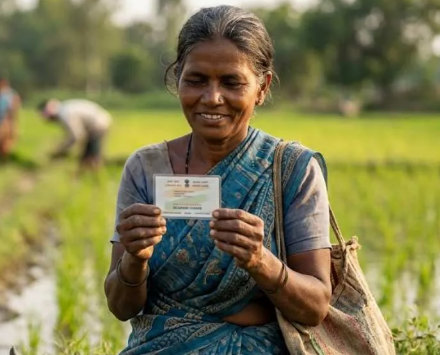
e-Shram Portal 2026
The e-Shram portal is a national
database for unorganized sector workers, launched by the Ministry of Labour and
Employment in collaboration with the NIC on August 26, 2021.
Its objective is to identify
unorganized workers and connect them with social security and welfare schemes.
Universal Account Number (UAN)
Every worker registered on e-Shram
is issued a 12-digit Universal Account Number (UAN).
It serves as the worker's permanent
digital identity and facilitates easier access to various government services
and social security schemes.
Which workers are included?
It includes workers from the
unorganized sector such as agricultural laborers, construction workers,
domestic workers, street vendors, auto-rickshaw drivers, migrant workers, and
gig/platform workers.
Generally, workers aged 16–59 years
who are not covered under formal social security systems like EPFO or ESIC
are eligible.
Registration and Digital Inclusion
Registration is primarily based on
Aadhaar-based e-KYC. Registration can be completed using an Aadhaar-linked
mobile number and necessary bank details.
Workers who do not have access to
digital tools can seek assistance through Common Service Centres (CSCs) and
State Seva Kendras. Registration is free of cost.
Linkage with Social Security
The objective of e-Shram is not
merely to create a database of workers but to provide them access to various
social security, insurance, employment, skill development, and
self-employment/credit schemes.
However, e-Shram registration alone
does not automatically guarantee benefits under any scheme; meeting the
specific eligibility criteria of the respective scheme remains mandatory.
Significance for UPSC and the Way
Forward
This topic is important for GS
Paper-II (Social Justice & Government Schemes).
e-Shram exemplifies universal
social security, digital governance, financial inclusion, and inclusive growth.
- 01 September 2026
- Schemes & committees
e-Shram Portal 2026
The e-Shram portal is a national
database for unorganized sector workers, launched by the Ministry of Labour and
Employment in collaboration with the NIC on August 26, 2021.
Its objective is to identify
unorganized workers and connect them with social security and welfare schemes.
Universal Account Number (UAN)
Every worker registered on e-Shram
is issued a 12-digit Universal Account Number (UAN).
It serves as the worker's permanent
digital identity and facilitates easier access to various government services
and social security schemes.
Which workers are included?
It includes workers from the
unorganized sector such as agricultural laborers, construction workers,
domestic workers, street vendors, auto-rickshaw drivers, migrant workers, and
gig/platform workers.
Generally, workers aged 16–59 years
who are not covered under formal social security systems like EPFO or ESIC
are eligible.
Registration and Digital Inclusion
Registration is primarily based on
Aadhaar-based e-KYC. Registration can be completed using an Aadhaar-linked
mobile number and necessary bank details.
Workers who do not have access to
digital tools can seek assistance through Common Service Centres (CSCs) and
State Seva Kendras. Registration is free of cost.
Linkage with Social Security
The objective of e-Shram is not
merely to create a database of workers but to provide them access to various
social security, insurance, employment, skill development, and
self-employment/credit schemes.
However, e-Shram registration alone
does not automatically guarantee benefits under any scheme; meeting the
specific eligibility criteria of the respective scheme remains mandatory.
Significance for UPSC and the Way
Forward
This topic is important for GS
Paper-II (Social Justice & Government Schemes).
e-Shram exemplifies universal
social security, digital governance, financial inclusion, and inclusive growth.

- 01 September 2026
- Sports
India finishes eighth in FIH World Cup after shootout loss to Belgium.
The Indian men's hockey team lost
4-3 in a penalty shootout after playing out a 3-3 draw against Belgium.
With this result, India secured the
eighth spot in the FIH Men's Hockey World Cup, while Belgium finished seventh.
India's Aggressive Start
India started the match strongly,
with Abhishek scoring in the opening minutes to give the team the lead.
However, Belgium staged a quick
comeback and took the lead through goals from Romain Duvekot and Hugo
Labouchere.
Captain Harmanpreet Singh's Stellar
Performance
Captain Harmanpreet Singh was one
of India's standout performers, scoring two goals during regulation time.
His goal in the dying moments
leveled the score at 3-3, proving crucial in taking the match to a penalty
shootout.
Belgium's Victory in the Penalty Shootout
India converted three of their four
attempts in the shootout.
Shilanand Lakra, Dilpreet Singh,
and Abhishek scored for India. Despite this, Belgium won the shootout 4-3 to
claim seventh place. Key Takeaways for Indian Hockey
India's performance highlights the
need for improvement in areas such as penalty conversion, defensive stability,
and match management.
In high-level international hockey,
mental toughness and strategic preparation are crucial for both regulation time
and decisive situations like shootouts.
Significance for UPSC
This news is important under the
categories of Current Affairs and Sports.
It can be linked to topics such as
the FIH, international hockey, India's sports diplomacy, sports infrastructure,
talent development, and India's performance at the Olympic Games.
- 01 September 2026
- Sports
India finishes eighth in FIH World Cup after shootout loss to Belgium.
The Indian men's hockey team lost
4-3 in a penalty shootout after playing out a 3-3 draw against Belgium.
With this result, India secured the
eighth spot in the FIH Men's Hockey World Cup, while Belgium finished seventh.
India's Aggressive Start
India started the match strongly,
with Abhishek scoring in the opening minutes to give the team the lead.
However, Belgium staged a quick
comeback and took the lead through goals from Romain Duvekot and Hugo
Labouchere.
Captain Harmanpreet Singh's Stellar
Performance
Captain Harmanpreet Singh was one
of India's standout performers, scoring two goals during regulation time.
His goal in the dying moments
leveled the score at 3-3, proving crucial in taking the match to a penalty
shootout.
Belgium's Victory in the Penalty Shootout
India converted three of their four
attempts in the shootout.
Shilanand Lakra, Dilpreet Singh,
and Abhishek scored for India. Despite this, Belgium won the shootout 4-3 to
claim seventh place. Key Takeaways for Indian Hockey
India's performance highlights the
need for improvement in areas such as penalty conversion, defensive stability,
and match management.
In high-level international hockey,
mental toughness and strategic preparation are crucial for both regulation time
and decisive situations like shootouts.
Significance for UPSC
This news is important under the
categories of Current Affairs and Sports.
It can be linked to topics such as
the FIH, international hockey, India's sports diplomacy, sports infrastructure,
talent development, and India's performance at the Olympic Games.
- 01 September 2026
- Awards
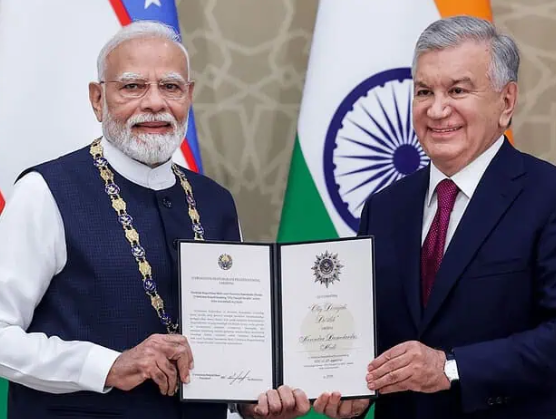
Prime Minister Modi Receives Uzbekistan's Highest Honor
During his visit to Tashkent on
August 30, 2026, Prime Minister Narendra Modi was honored with Uzbekistan's
highest award, the 'Oliy Darajali Do‘stlik'.
This translates to the 'Order of
Friendship of the Highest Degree'.
Modi dedicated this honor to the
people of India, India's ancient heritage, and the historic friendship shared
by the two nations.
Upgrading
Relations to a Comprehensive Strategic Partnership
India and Uzbekistan decided to
elevate their bilateral ties to the level of a Comprehensive Strategic
Partnership.
This move will strengthen long-term
cooperation in sectors such as trade, investment, defense, energy, digital
connectivity, and nuclear cooperation.
Uranium Supply Agreement
The two countries signed an agreement
concerning the long-term supply of uranium to India.
This is significant for India in
terms of its nuclear energy program and energy security.
It could help strengthen the role
of nuclear energy within India's energy mix.
India's
Strategic Interests in Central Asia
Uzbekistan is a key country in
Central Asia; for India, this region holds strategic importance regarding
energy resources, trade, connectivity, counter-terrorism cooperation, and
geopolitical balance. Strong ties with Uzbekistan can provide momentum to
India’s ‘Connect Central Asia’ policy.
Civilizational
and Cultural Ties
India and Central Asia share
ancient links regarding trade, culture, language, art, and history.
‘Dustlik’ means friendship,
reflecting the historical and people-to-people ties between the two nations.
Such cultural connections provide a
robust foundation for a modern strategic partnership.
Significance
for UPSC
This topic is crucial for GS
Paper-II (International Relations), covering India–Central Asia relations,
energy security, nuclear diplomacy, and regional connectivity.
- 01 September 2026
- Awards
Prime Minister Modi Receives Uzbekistan's Highest Honor
During his visit to Tashkent on
August 30, 2026, Prime Minister Narendra Modi was honored with Uzbekistan's
highest award, the 'Oliy Darajali Do‘stlik'.
This translates to the 'Order of
Friendship of the Highest Degree'.
Modi dedicated this honor to the
people of India, India's ancient heritage, and the historic friendship shared
by the two nations.
Upgrading
Relations to a Comprehensive Strategic Partnership
India and Uzbekistan decided to
elevate their bilateral ties to the level of a Comprehensive Strategic
Partnership.
This move will strengthen long-term
cooperation in sectors such as trade, investment, defense, energy, digital
connectivity, and nuclear cooperation.
Uranium Supply Agreement
The two countries signed an agreement
concerning the long-term supply of uranium to India.
This is significant for India in
terms of its nuclear energy program and energy security.
It could help strengthen the role
of nuclear energy within India's energy mix.
India's
Strategic Interests in Central Asia
Uzbekistan is a key country in
Central Asia; for India, this region holds strategic importance regarding
energy resources, trade, connectivity, counter-terrorism cooperation, and
geopolitical balance. Strong ties with Uzbekistan can provide momentum to
India’s ‘Connect Central Asia’ policy.
Civilizational
and Cultural Ties
India and Central Asia share
ancient links regarding trade, culture, language, art, and history.
‘Dustlik’ means friendship,
reflecting the historical and people-to-people ties between the two nations.
Such cultural connections provide a
robust foundation for a modern strategic partnership.
Significance
for UPSC
This topic is crucial for GS
Paper-II (International Relations), covering India–Central Asia relations,
energy security, nuclear diplomacy, and regional connectivity.

- 01 September 2026
- Sports
Germany retains Hockey World Cup title with a 1-0 victory.
Germany won their second
consecutive FIH Men's Hockey World Cup title by defeating Spain 1-0 in the
final played at the Belfius Hockey Arena.
Michel Struthoff scored the
decisive goal in the 44th minute. Organized by the International Hockey
Federation, this tournament is among the premier competitions in international
hockey.
Germany
and Pakistan Jointly at the Top
With this victory, Germany secured
their fourth Men's Hockey World Cup title.
Germany's previous titles were won
in 2002, 2006, and 2023. Pakistan has also won the World Cup four times (1971,
1978, 1982, and 1994).
Therefore, Germany now equals
Pakistan in terms of the most Men's Hockey World Cup titles won.
The
Decisive Goal and Germany's Strategy in the Final
In the first half, both teams
adopted a primarily defensive approach, and the score remained 0-0.
Spain increased the pressure in the
second half, but in the 44th minute, Germany created an opportunity through a
coordinated attack from the wings, and Struthoff scored to give them the lead.
Germany maintained their defensive
structure until the final whistle.
Spain's Third Final, Yet Title Eludes Them
Spain reached the Men's Hockey
World Cup final for the third time but failed to clinch the title on this
occasion as well.
Their previous final appearance was
in 1998. In the closing stages of the match, Spain replaced their goalkeeper
with an extra attacker but still could not score the equalizer.
Argentina
Wins Bronze Medal
In the bronze medal match,
Argentina defeated the Netherlands 2-1.
Tomás Domene and captain Matías Rey
scored for Argentina, while Floris Middendorp scored the equalizer for the
Netherlands.
The decisive goal came from a penalty
corner in the 59th minute.
Significance for UPSC
This news is relevant for GS
Paper-I (World Events), Current Affairs, and Sports Awareness.
Related facts—such as the FIH, the
Men's Hockey World Cup, records for most titles, the achievements of Germany
and Pakistan, and India's hockey legacy—could form the basis of factual
questions in the Preliminary examination.
- 01 September 2026
- Sports
Germany retains Hockey World Cup title with a 1-0 victory.
Germany won their second
consecutive FIH Men's Hockey World Cup title by defeating Spain 1-0 in the
final played at the Belfius Hockey Arena.
Michel Struthoff scored the
decisive goal in the 44th minute. Organized by the International Hockey
Federation, this tournament is among the premier competitions in international
hockey.
Germany
and Pakistan Jointly at the Top
With this victory, Germany secured
their fourth Men's Hockey World Cup title.
Germany's previous titles were won
in 2002, 2006, and 2023. Pakistan has also won the World Cup four times (1971,
1978, 1982, and 1994).
Therefore, Germany now equals
Pakistan in terms of the most Men's Hockey World Cup titles won.
The
Decisive Goal and Germany's Strategy in the Final
In the first half, both teams
adopted a primarily defensive approach, and the score remained 0-0.
Spain increased the pressure in the
second half, but in the 44th minute, Germany created an opportunity through a
coordinated attack from the wings, and Struthoff scored to give them the lead.
Germany maintained their defensive
structure until the final whistle.
Spain's Third Final, Yet Title Eludes Them
Spain reached the Men's Hockey
World Cup final for the third time but failed to clinch the title on this
occasion as well.
Their previous final appearance was
in 1998. In the closing stages of the match, Spain replaced their goalkeeper
with an extra attacker but still could not score the equalizer.
Argentina
Wins Bronze Medal
In the bronze medal match,
Argentina defeated the Netherlands 2-1.
Tomás Domene and captain Matías Rey
scored for Argentina, while Floris Middendorp scored the equalizer for the
Netherlands.
The decisive goal came from a penalty
corner in the 59th minute.
Significance for UPSC
This news is relevant for GS
Paper-I (World Events), Current Affairs, and Sports Awareness.
Related facts—such as the FIH, the
Men's Hockey World Cup, records for most titles, the achievements of Germany
and Pakistan, and India's hockey legacy—could form the basis of factual
questions in the Preliminary examination.
- 01 September 2026
- Appointments
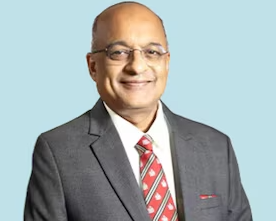
HDFC Bank MD & CEO Sashidhar Jagdishan to Retire on October 26, 2026
HDFC Bank MD & CEO Sashidhar
Jagdishan has decided to retire effective October 26, 2026.
He has chosen not to renew his
contract for the subsequent term.
This decision highlights the
significance of leadership transition and corporate governance within the
private banking sector.
His Tenure at HDFC Bank
Jagdishan assumed the role of MD
& CEO of HDFC Bank in October 2020, succeeding Aditya Puri.
A pivotal event during his tenure
was the merger of HDFC Bank and HDFC Ltd., marking a major corporate
restructuring within India's financial sector.
Succession
Selection and Planning
Following Jagdishan's decision, the
bank's Board of Directors will expedite the process of selecting and appointing
his successor.
Effective succession planning is
crucial for major financial institutions to ensure operational continuity,
maintain investor confidence, and uphold risk management standards.
Importance
of Corporate Governance
The independence, transparency, and
accountability of the Board of Directors are vital during leadership
transitions.
In the banking sector, the
objective of corporate governance extends beyond management oversight to
include risk management, regulatory compliance, and the protection of
stakeholder interests.
Internal
Controls and Audit
Instances involving internal
reviews and audits have come to light regarding certain administrative and
transactional matters concerning the bank.
This incident highlights the
necessity for robust internal audit, internal controls, accountability, and
compliance mechanisms within banks, given that banking institutions are
directly linked to public trust and financial stability.
Broad
Significance for UPSC
This issue can be linked to topics
such as Corporate Governance, Banking Regulation, Financial Stability, and Risk
Management within the scope of GS Paper-III (Indian Economy & Banking).
- 01 September 2026
- Appointments
HDFC Bank MD & CEO Sashidhar Jagdishan to Retire on October 26, 2026
HDFC Bank MD & CEO Sashidhar
Jagdishan has decided to retire effective October 26, 2026.
He has chosen not to renew his
contract for the subsequent term.
This decision highlights the
significance of leadership transition and corporate governance within the
private banking sector.
His Tenure at HDFC Bank
Jagdishan assumed the role of MD
& CEO of HDFC Bank in October 2020, succeeding Aditya Puri.
A pivotal event during his tenure
was the merger of HDFC Bank and HDFC Ltd., marking a major corporate
restructuring within India's financial sector.
Succession
Selection and Planning
Following Jagdishan's decision, the
bank's Board of Directors will expedite the process of selecting and appointing
his successor.
Effective succession planning is
crucial for major financial institutions to ensure operational continuity,
maintain investor confidence, and uphold risk management standards.
Importance
of Corporate Governance
The independence, transparency, and
accountability of the Board of Directors are vital during leadership
transitions.
In the banking sector, the
objective of corporate governance extends beyond management oversight to
include risk management, regulatory compliance, and the protection of
stakeholder interests.
Internal
Controls and Audit
Instances involving internal
reviews and audits have come to light regarding certain administrative and
transactional matters concerning the bank.
This incident highlights the
necessity for robust internal audit, internal controls, accountability, and
compliance mechanisms within banks, given that banking institutions are
directly linked to public trust and financial stability.
Broad
Significance for UPSC
This issue can be linked to topics
such as Corporate Governance, Banking Regulation, Financial Stability, and Risk
Management within the scope of GS Paper-III (Indian Economy & Banking).
- 01 September 2026
- Schemes & committees
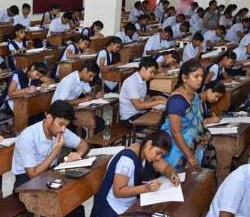
Public Examination Reform 2.0 (PER 2.0)
Public Examination Reform 2.0
envisions an end-to-end examination security framework for high-stakes
recruitment and entrance examinations.
Its goal is to make the examination
system "Secure-by-Design" rather than merely reacting to paper leaks
or irregularities after they occur.
It emphasizes security and
accountability at every stage, from question formulation to the declaration of
results.
Question
Paper Security and Chain of Custody
The risk of paper leaks is not
limited to the transportation of question papers; it can also arise during
question formulation, moderation, translation, and digital storage.
Therefore, it is essential to
ensure background checks for experts, declarations regarding conflicts of
interest, secure question banks, and a robust chain of custody for question
papers.
End-to-End
Digital Monitoring
Measures such as role-based access,
biometric authentication, digital watermarking, and activity logging are
crucial to PER 2.0.
Technology-based allocation of
examination centers, CCTV surveillance, and cyber audits of digital systems can
mitigate risks associated with local-level collusion and technical tampering.
Independent
Audits and Merit Integrity
Merely declaring results after the
examination is insufficient. Measures such as identifying anomalous score
patterns and suspicious clusters through statistical analysis, conducting
independent cyber forensic audits, and ensuring whistleblower protection are
essential.
These steps will strengthen the
integrity of the selection process based on merit and bolster the confidence of
candidates.
Institutional
Accountability and Legal Reforms
Examination reforms recommended by
various committees should not be treated merely as suggestions.
A time-bound Action Taken Report
(ATR), clearly defined responsibilities, and mandatory Standard Operating
Procedures (SOPs) are essential.
Furthermore, the effective
implementation of the Public Examinations (Prevention of Unfair Means) Act,
2024, can help effectively curb examination-related fraud.
Significance for UPSC
India should develop a National
Examination Integrity Framework that establishes uniform minimum security
standards for the National Testing Agency, the Union Public Service Commission,
State PSCs, and recruitment boards.
- 01 September 2026
- Schemes & committees
Public Examination Reform 2.0 (PER 2.0)
Public Examination Reform 2.0
envisions an end-to-end examination security framework for high-stakes
recruitment and entrance examinations.
Its goal is to make the examination
system "Secure-by-Design" rather than merely reacting to paper leaks
or irregularities after they occur.
It emphasizes security and
accountability at every stage, from question formulation to the declaration of
results.
Question
Paper Security and Chain of Custody
The risk of paper leaks is not
limited to the transportation of question papers; it can also arise during
question formulation, moderation, translation, and digital storage.
Therefore, it is essential to
ensure background checks for experts, declarations regarding conflicts of
interest, secure question banks, and a robust chain of custody for question
papers.
End-to-End
Digital Monitoring
Measures such as role-based access,
biometric authentication, digital watermarking, and activity logging are
crucial to PER 2.0.
Technology-based allocation of
examination centers, CCTV surveillance, and cyber audits of digital systems can
mitigate risks associated with local-level collusion and technical tampering.
Independent
Audits and Merit Integrity
Merely declaring results after the
examination is insufficient. Measures such as identifying anomalous score
patterns and suspicious clusters through statistical analysis, conducting
independent cyber forensic audits, and ensuring whistleblower protection are
essential.
These steps will strengthen the
integrity of the selection process based on merit and bolster the confidence of
candidates.
Institutional
Accountability and Legal Reforms
Examination reforms recommended by
various committees should not be treated merely as suggestions.
A time-bound Action Taken Report
(ATR), clearly defined responsibilities, and mandatory Standard Operating
Procedures (SOPs) are essential.
Furthermore, the effective
implementation of the Public Examinations (Prevention of Unfair Means) Act,
2024, can help effectively curb examination-related fraud.
Significance for UPSC
India should develop a National
Examination Integrity Framework that establishes uniform minimum security
standards for the National Testing Agency, the Union Public Service Commission,
State PSCs, and recruitment boards.